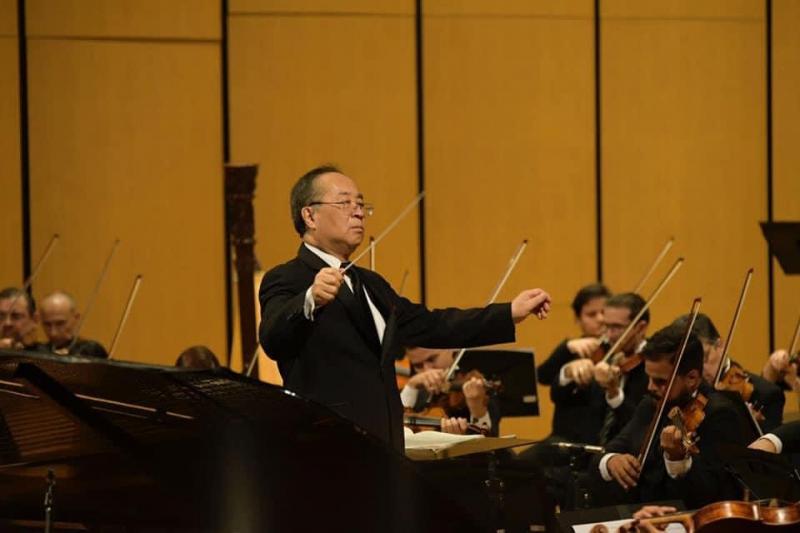
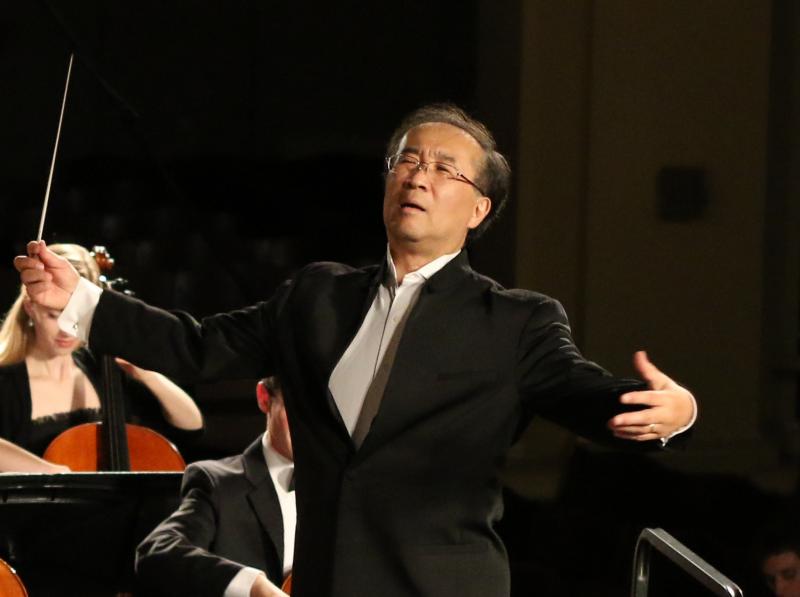
TOSHIYUKI SHIMADA
MUSIC DIRECTOR AND CONDUCTOR
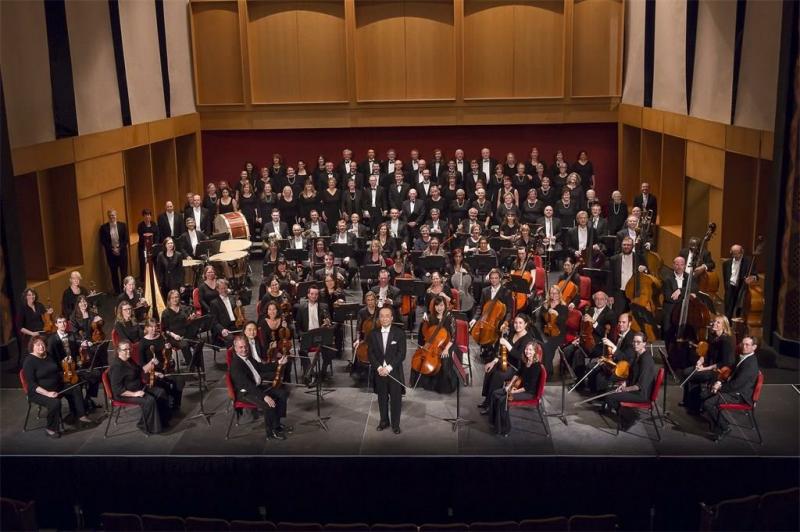
Eastern Connecticut Symphony Orchestra
www.ectsymphony.com

MUSIC DIRECTOR AND CONDUCTOR
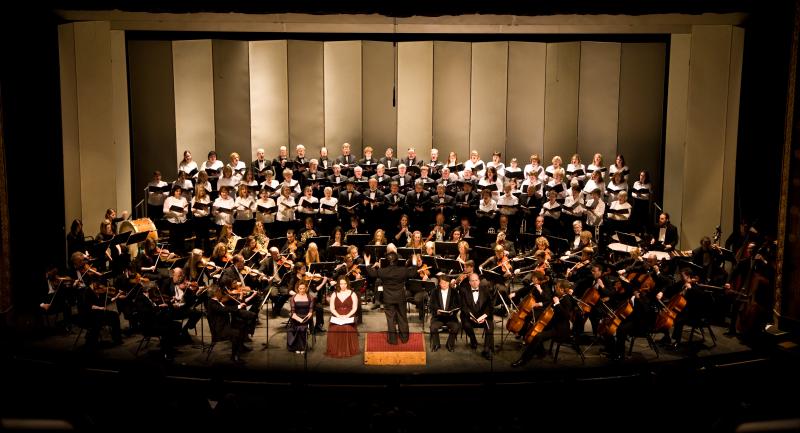
The Orchestra of the Southern Finger Lakes
www.osfl.org

MUSIC DIRECTOR AND CONDUCTOR
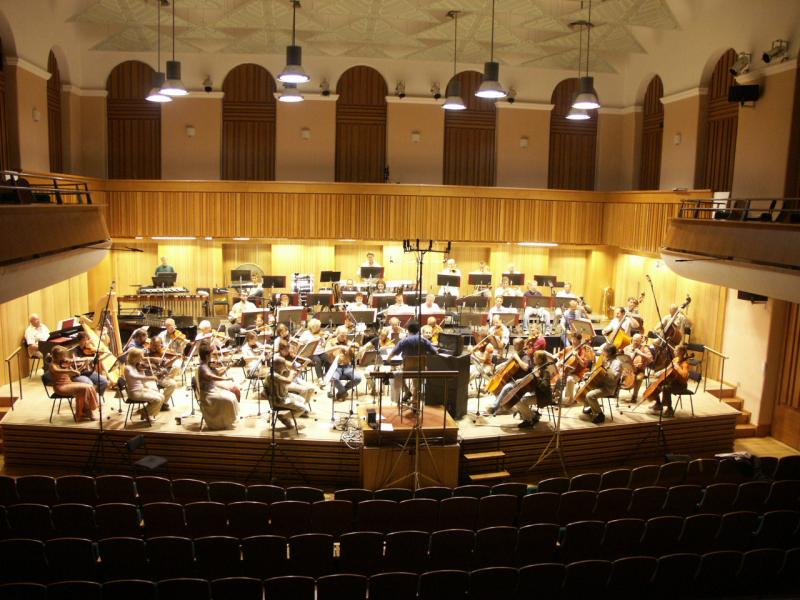
Yale Symphony Orchestra
www.yalesymphony.net

MUSIC DIRECTOR LAUREATE
Portland Symphony Orchestra

PRINCIPAL CONDUCTOR
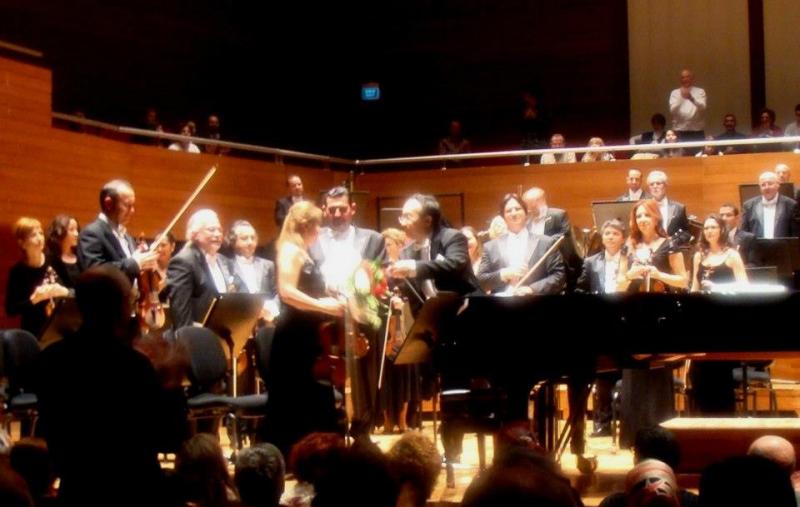
Vienna Modern Masters

ASSOCIATE PROFESSOR OF CONDUCTING
Yale School of Music, Yale University
"First, it goes to
conductor Toshiyuki
Shimada, who led the
three works with a
nuance, a sense of
musical narrative and a
sonic transparency that
audiences here have
seldom experienced."  
On Concert with Eastern
Connecticut Symphony
Orchestra    The Day,
New London
Counter
"With the leadership of
Toshiyuki Shimada, the
total sum it up in one
word: exquisite ...
remarkable for his clean
style and his master in
the wide ranges of
pianos and fortes."  On
Concert with Orqesta
Filarmonica de Jalisco
El Informador,
Guadalajara, Mexico
REVIEW


Article published Apr 18, 2010
Under a new conductor, an orchestra is renewed
By Milton Moore
The transformation of the Eastern Connecticut Symphony Orchestra under
new Music Director Toshi Shimada couldn't be more dramatic. Or perhaps
we should say, less dramatic.
Drama is not Shimada's forte. Under his leadership, the ECSO concerts go
as they should. When you are playing the music of Mozart or Ravel or
Copland, it should go very well - and it has.
The six-concert season that ended this month seemed an encore to
Shimada's stellar try-out concert in 2008 during the music director play-offs
that saw five finalists compete for the position. As in that first concert,
Shimada's hallmarks have been a fine sensitivity to the details of a score
without sacrificing its overall sweep, an ability to draw out the virtuosity of
the orchestra's talented principals and a canny survival guide for The Garde
Arts Center's acoustic desert.
The Yale University professor, with a track record of leading orchestras this
size, replaced Xiao-Lu Li, who had led the orchestra for nine seasons. Most
conductor/orchestra marriages go through a seven-year itch, and nine
seasons is a long haul. The time was ripe for a growth spurt, though
improvement isn't always a given.
But the quality of this orchestra this season was at times startling. We had all
heard the violin section improve during Li's tenure, but the suddenness of
the transformation of the whole under Shimada couldn't have been
imagined. In December, I returned from a couple orchestra concerts in New
York, including the New York Philharmonic, to hear the ECSO play
Haydn's "London" Symphony and was shocked by how fine it was in
comparison. More remarkably, I heard Peter Serkin perform the same
Brahms piano concerto in Carnegie Hall that he performed here with
Shimada; without a doubt, the performance here was better. How can this
orchestra change so quickly?
One obvious difference in the ECSO under Shimada and Li is the
conductors' approaches to the Garde's arid acoustic. Li's solution was to turn
up the volume. His range of dynamics seemed to begin somewhere around
mezzo forte and rise from there, and anyone not accustomed to his
conducting might have thought he had some odd palsy in his left hand,
which constantly twitched toward the violin section to urge them to be
louder and louder still.
Shimada uses the acoustic to his advantage. The lack of rich low tones and
warmth in the hall tends to highlight the orchestra's brighter voices in the
winds and brass section. Shimada has used this to paint a striking clarity in
the orchestra's sonic presence. Sectional play by the strings does not bury
the brighter voices, and Shimada uses this transparency wisely. Much of this
can be attributed to his acumen at the podium, but much is the wisdom of
his programming.
Li's taste in musical fare pretty much went from the early Romatics to late
Romantics, with all the Romantics in between (who can forget his
Rachmaninoff- Rachmaninoff-Tchaikovsky concert?). This musical era of
massed strings and big gestures fit his search for sonic heft, and the audience
learned the equation: volume + volume = bombast. Li's one-dimensional
programming brought a dreary sameness to ECSO concerts.
Shimada's musical selections have been more varied in his first season than
perhaps the entire decade of the Nineties for the ECSO. He has brought
back the neglected Classical era, with wonderful performances of Mozart
and Haydn that employed a small orchestra and succeeded with wit and
energy and phrasing. He put a good deal of post-Romantic 20th century
music on the stage, including Bernstein, Copland, Stravinsky, Hindemith,
Poulenc and Ravel. He quickly won the trust of his audience, and there was
little fidgeting when he presented new music (though his choices have been,
wisely enough, short pieces).
And more importantly, he's won the trust of orchestra members. He shows
up for rehearsal with his head in the game, and the musicians reciprocate. In
concert, he's there when they need him.
Though Shimada showed his mettle with the big Romantic pot-boilers, such
as his Tchaikovsky Fifth Symphony, his finest moments have been some of
the most intimate stretches of a score. During the slow movement of the
spare Schumann Cello Concerto, the effect was so spellbinding, I had to
remind myself to breathe.
Shimada exudes an easy-going warmth, both from the podium and in
person, and he's appears utterly comfortable in the spotlight. His close
proximity as a resident of the New Haven area (Li lived in Louisiana) has
helped him become a familiar face here, as he's made frequent outreaches to
civic groups and schools and often gives the pre-concert lectures. He
displays none of a maestro's aloofness and reinforces his regular-guy
persona with his avid love of baseball, a passion on display in the ECSO
window, where a poster-sized photo captures Shimada, in his conductor's
tails, throwing out the first ball at an Astros game.
He's an online guy, his Blackberry always at the ready, and since his arrival,
the ECSO has started a Facebook page, which has included links to
YouTube clips of music scheduled for coming concerts.
The orchestra is the 800-pound gorilla in any arts community. It gets the big
stage on Saturday nights, and as former ECSO leader Paul Phillips once
noted, if you assess the years of study and apprenticeship represented by the
musicians, it's like having 80 surgeons on stage. The orchestra is a huge
community and personal commitment of time and money to the art form.
You wouldn't want to hand over a treasure like this to just anyone. Looking
back across the ECSO season, it certainly seems like the orchestra is in good
hands.

Review: Shimada knows the score with ECSO

By Milton Moore
Publication: The DayPublished 01/25/2010 12:00 AM Updated 01/25/2010 06:19 AM

New London - At the start of Saturday's Eastern Connecticut Symphony Orchestra concert, the fourth under new Music
Director Toshi Shimada, the conductor asked the audience at the Garde Arts Center for a mid-term grade.

In the audience's programs, Shimada said, there's a questionnaire, one that focused on audience response to his
programming of music new to this audience. "I'm wondering what you're thinking," Shimada said.The crowd
immediately replied with applause.

Shimada then proceeded to conduct a spirited and revelatory program of three works that spanned centuries and
once again proved that he has lifted the orchestra to a new level. His conducting reveals the myriad voices in each
work, a sonic transparency that never feels fussy, while retaining a keen sense of the overall shape and effect of long
spans of composition.

In the evening's big sonic work, Stravinsky's 1947 Suite from "Petrouchka," it seemed that each principal in the
orchestra was a star, as the mercurial orchestration spotlighted an obbligato for virtually every instrument amid its
cross-cutting meters and rhythmic bustle. In the programmatic counterpoint to Stravinsky, Haydn's 1795 Symphony
No. 104, the "London Symphony," Shimada led a pared-down, Classical-era sized ensemble in a beautifully phrased
and paced performance that mined all the wit, tunefulness and pure pleasure Haydn offers.

Between these stylistic bookends, he used a smaller orchestra still - just 28 pieces - for Ibert's 1935 concerto for
chamber orchestra and alto saxophone, the Concertino da Camera. The soloist in this very French, very Jazz Age work
was ECSO Instrumental Composition Contest winner Stephen Charles Page Jr., who traversed its cascades of sixteenth
notes and the sax's wide register, from its guttural basement to its upper oboe territory, with a playful ease. In the
bluesy opening to the second movement, his honeyed tone and supple phrasing, with no apparent attack to any note,
transformed the theater hall with a late-night jazz club spell.

The opening performance of the London Symphony, which Shimada called his "tribute to New London," basked in
the charms of the Classical era, a period overlooked for nearly a decade by the former music director. The small
orchestra - with just four cellos - was at its best, the string sections responding beautifully to Shimada's fine sense of
phrasing. The andante slow movement was both delicate and rhythmically sharp - no small feat - and as the surprising
modulations at its center dropped into an emotive minor, Shimada threw back his shoulders and spread his arms, as if
swan diving into its depths.

The concluding Stravinsky suite, for all of its sizzle, is woven of thin cloth, with a handful of motifs that reappear again
and again. It succeeds on its rhythmic energy and on the musicians' virtuosity as the score's spotlight moves from
section to section - and Saturday, it was a success indeed.

Shimada kept the polyrhythms brewing, creating a sense of ostinato as its unifying character. He drew on all of its
sonic power, especially the nearly sub-sonic rumblings from the large bass section, the contrabassoon and that most
Russian basso profundo of instruments, the bass clarinet.

Virtually all of the principals had fine moments, often paired or in trios. Flutist Nancy Chaput, oboist Anne Megan,
pianist Gary Chapman, bassoonist Tracy McGinnis, English hornist Olav van Hezewijk, trumpeter Julia Caruk, and
concertmaster Stephan Tieszen all earned their bows.

The sound world was luxurious, from muted brass ensembles to bass clarinet and clarinet doubling to create a box
organ effect. The one flaw was the use of an electronic keyboard for the celeste, which sounded far more like a synth
than the sparkling chimes of the true instrument.


Article published Nov 16, 2009
Review: A starry night for the ECSO

New London - Saturday evening's concert by the Eastern Connecticut Symphony Orchestra was a tribute to
thinking big.
Music director Toshi Shimada fronted a big orchestra bristling with percussionists, led three works that took
very different approaches to create a sense of the monumental, and collaborated with the biggest name soloist
the ECSO has presented in many a year.
The soloist was pianist Peter Serkin - he of musical royalty, the son of pianist Rudolf Serkin and grandson of
violinist Adolf Busch - who lived up to his billing with a bravura performance of Brahms' Piano Concerto No. 1.
The tall, patrician Serkin, at the peak of his artistic powers at age 62, was commanding as he traversed the
scope of this most Romantic of Brahms' major works, alternately explosively forceful and entrancingly
introspective.
This is a concert piece that is fueled more by emotion and the quality of expression than by virtuosity, a concerto
that was recast from piano sonatas and has far less a sense of soloist and accompaniment than most. Younger
soloists could have learned much by watching Serkin and Shimada interact, as they kept close watch on each
other and shared the pulse of the work's give-and-take.
In the big two-handed chords that propel the outer movements, Serkin fairly vibrated with energy, especially in
the first movement, which Shimada took at a brisk pace and shook off any traces of gloom from its portentous
orchestral opening. But most arresting was Serkin's treatment of the hushed, lyrical second theme, as he
intensified the drama by hanging off the beat, creating the sense that he was drifting away in his own reverie,
while never losing the thread of ensemble.
That mood was redoubled in the slow movement, which opened with a lush sonority in the strings and bassoons
before Serkin wove a poetic solo so intimate that audience members in the Garde Arts Center must have felt as
if they were eavesdropping.
The final movement, the most conventional of the three with its rondo form for pianistic variety, was all dashing
excitement. Here, Serkin and Shimada were in constant interplay - on Serkin's return to the expansive second
motif, Shimada beamed at him from the podium like a proud father. The mood of collaboration was confirmed
when, after a sustained final ovation, Serkin walked around the orchestra to shake hands with the key front desk
principals.
Sharing the spotlight in the two other big works on the program were the sonic yin and yang of flutist Nancy
Chaput and timpanist Kuljit Rehncy.
The program opened with "blue cathedral," a 1999 tone poem by American composer Jennifer Higdon, the most-
performed contemporary work in the U.S. these days. A tribute to the composer's brother, who died in youth, it is
built on two singing voices - that of the composer, as voiced by flutist Chaput, and her brother, voiced by clarinet
principal Kelli O'Connor.
The Copland-like work started with these two voices over softly sighing strings, and it built in layers of sound,
reaching a vibrant sonority as the five percussionists (three playing the chimes together at one point) and
timpanist Rehncy joined with a brass chorale. And the orchestral color drifted into new territory in the moving
closing measures, as the clarinet seemingly ascended to the heavens over the soft rustle of 50 quiet Chinese
bells in the hands of the string players and the eerie hum of glass harmonicas (wine glasses rubbed to vibrate) in
the hands of the brass section.
Chaput had the starring role in the program's central piece, Hindemith's Symphonic Metamorphosis of Themes by
Weber, a 1943 work written while the German composer was the head of the music department at Yale, where
Shimada now teaches.
Shimada was at his finest leading this four-movement work, keeping it light on its feet and, as is becoming his
trademark here, transparent in the complex voicings of the intricate sectional interplay. Hindemith brews up a
thick contrapuntal stew in much of it, but Shimada never bogged down.
Chaput shined brightly in the complex, long flute obbligato ending the slow movement, a fleet and long-breathed
passage that lit up the hall. And Rehncy and the percussionists put on a great show of musicianship as they took
a set of variations from the energetic and playful scherzo and made them sing.
It was an entertaining, at times thrilling, evening. Shimada continues to win audience trust in his first season
here; both the contemporary work and the potential quagmire of Hindemith were vivid, fresh and well-received.
And the appreciative audience gave a long ovation to one member of the ECSO who has yet to pick up an
instrument.
Orchestra Executive Director Isabelle Singer was honored at intermission for her 25th anniversary of keeping
the orchestra on stage and thriving. Now on her fourth music director here, Singer gets to take much of the credit
for orchestra's success.
ECSO board president Paul McGlinchey put it succinctly as he gestured to the orchestra: "What you see here on
the stage, our new music director Toshi Shimada, all these talented musicians … the common thread is Isabelle
Singer."


REVIEW

Shimada, Tieszen delight in ECSO concert  
By Milton Moore  

Published on 10/19/2009 in Home »Features »Features  
New London - It's easy to be fooled by Toshi Shimada's conducting. Watching Shimada lead the Eastern
Connecticut Symphony Orchestra without a score in Tchaikovsky's Symphony No. 5, conducting the 50-minute
work with detailed, full-body control of the 80-piece ensemble, you could be lured into believing that the
orchestra is just one vast instrument and Shimada is the virtuoso soloist.
Crafting the long sweep of musical drama, with its nuances of sonic and emotional shape-shifting, was
Shimada's obvious triumph Saturday night at the Garde Arts Center. But the orchestra's new music director
seems to have the gift for enabling the musicians far more than controlling them.

In Saturday's concert, which also featured a thoroughly entertaining reading of Mozart Violin Concerto No. 5 by
ECSO Concertmaster Stephan Tieszen, Shimada continued to display what may be his trademark: his ability to
reveal inner voices, to display the subtleties of a score without getting lost in the details, and to allow the
musicians to play at their best.

In the symphony's opening moments, as clarinetists Kelli O'Connor and Chantal Hovendick paired for the somber
“Fate” theme that underpins the entire work, Shimada carried them forward on gently swelling, beautifully
phrased sectional playing in the violas and cellos. In the long, exposed solo that opens the lovely second
movement, long-time ECSO French horn principal Dana Lord captivated the audience with a gorgeous tone, yet
Shimada supported Lord's spotlight moment with seamless sonic bloom growing from the cellos through the
violins. And not lost in the infectious waltzing strings of the third movement were the lovely solos by principal
bassoonist Tracy McGinnis.

Under Shimada, the ECSO can be thrilling both in its sum and in its parts.

In Tchaikovsky's almost bipolar score that leaps back and forth from fortissimos to pianissimos, Shimada found
countless nuances of dynamics in between. The “Fate” theme, which returns again and again in different
dramatic roles, seemed endlessly colored, with dynamic tapering within measures at times. This sonic control
made the brassy blaze-ups all the more spine-tingling, even savage.

Shimada is also a visual guide for the audience. As the calm second movement love song grew in intensity from
the horns and winds through the strings, the conductor was all but vibrating with the mounting tension. After the
snarling “Fate” theme shattered the movement's reverie, Shimada bent at the waist and swayed both arms like a
human metronome to start the string pizzicatos back in time. In the symphony's finale, as the “Fate” theme finally
emerges as a heroic march, the conductor raised himself to full height and threw back his head with a look as
triumphant as the theme.

The vast Romantic outpouring of the Tchaikovsky was nicely contrasted by Tieszen's performance of the Mozart
concerto, playing on gut strings before Classical-era sized 25-piece orchestra.

Tieszen's solo was a labor of love, with many months of preparation as he not only edited the score using a
facsimile copy of Mozart's original, he wrote his own cadenzas, those exposed solo show-stoppers, performed
for the first time Saturday.

Playing, as did Mozart, on gut strings, Tieszen cast a sweet sound and an air of intimacy, even in this most
playful concerto. In the first movement, he shaped the phrasing and the timbre subtly between phrases to create
the sense of an internal dialogue. In the slow movement, he created a breathy swell in the long phrases, rising
and falling like an operatic messa di voce. And his cadenzas were delights.

The musical ideas for his first movement cadenza were drawn from the orchestral introduction, first in stops,
then with drones accompanying the figures before drifting into a lyrical mood. The slow movement cadenza,
which Tieszen said he completed the day before the performance, was based on the see-sawing, back-and-forth
figure at the heart of the movement's songlike theme, salted with tangy stops. And the third movement cadenza
was based on the goofy theme of the Turkish march section, made even more extreme, and he employed a
harmonic sleight-of-hand to lyrically slide out of it all.

The cadenzas were characteristic, perhaps more fitting the source music than many in common use, with a
sense of freshness and adventure, and Tieszen salted the final movement with a number of ornaments of his
own making.

The concerto suffered a bit from an imbalance at times between the orchestra and soloist, due to the inherent
differences between modern strings and gut strings. And at the start of the Turkish march, as Shimada turned to
look at the violinist with an impish smile, Tieszen knocked his score from the stand and had to pause the
performance to reassemble its many sheets.

The program opened with Toru Takemitsu's 1982 “Star-Ilse,” a concise tone-painting inspired by the composer's
communion with nature.

Saturday's concert was Shimada's third leading the ECSO (including his audtion last year), and he continued to
reveal not just the beauty and vitality of the scores, but the talent of his musicians. The mood in the hall, and the
orchestra itself, couldn't be brighter.


REVIEW

September 28, 2009

A happy 'hello' for the ECSO audience

By Milton Moore
Published on 9/28/2009 in the DAY, New London, CT, USA

Toshiyuki Shimada did not disappoint. The ovation was long and strong at the Garde Arts Center Saturday when he
simply showed his face on stage, and the new music director of the Eastern Connecticut Symphony Orchestra, so
winning in his tryout here a year ago, once again charmed the audience with his wit and delighted them with his
music-making.

From the long lyrical spans of Schubert's Unfinished Symphony to the rapid-fire metric complexities of Bernstein's
Overture to “Candide,” Shimada proved a perfect fit, revealing talents of the ECSO ensemble and principals seldom
heard before. He led an intentionally tuneful, crowd-pleasing program that thoroughly pleased the near-sell-out crowd.

An assistant professor of conducting at Yale and music director of the Yale Symphony Orchestra, Shimada began the
evening with a brief statement of appreciation at his selection from a group of six finalists to replace Xiao-Lu Li, who
led the ECSO for a decade. Shimada gestured to the audience as he said, “We are now starting, all together, our
collaboration.” He had programmed what he called “a pop-sy concert … You will be saying, “I know this tune.’” He
opened with Rossini's Overture to “William Tell,” a television staple from “Loony Tunes” to “The Lone Ranger,” to prove
his point.

Sharing the spotlight with Shimada were many of the orchestra's principals: new cello principal, the 25-year-old
Romanian-born Mihai Marica, whose obbligatos and very presence seem to have transformed a crucial section; oboist
Anne Megan; trumpet principal Julia Caruk; and above all, clarinet principal Kelli O'Connor, who along with Clark
had a ball wandering off the charts in Gershwin's “Rhapsody in Blue.”

From cellist Marica's opening of the Rossini overture and the unexpected pleasures of the singing operatic voice in
the cello section, the orchestra played superbly for Shimada - and seemed to know it. There were smiles everywhere.

Shimada appears immune to performance pressure; he radiated a sense of ease and comfort fronting the 80-plus
musicians. He is active in his cuing, attentive with the baton when called for and physically dynamic without seeming
showy. He did flash some moments of showmanship, pantomiming a rider during the galloping rhythms of the hoe-
down in Copland's “Rodeo.” After the applause, he said to the audience, “You have never seen a Japanese cowboy
before, have you?” He had the audience howling with his demonstration of his Texas/Japanese accent, acquired
during his five years with the Houston Symphony Orchestra.

During the lyrical and emotive Schubert, a few audience members clapped after the first movement, and Shimada
turned to hush them. Afterward, he explained he felt clapping between movements breaks the flow of the
composition, and at the end of the first movement of the four-movement Copland, when a smattering of applause
rippled, he turned with a sly smile and waved four fingers. But, as in his tryout here, it was the response of the
musicians that was most dramatic. Once again, Shimada gave this orchestra a new sound, more transparent to reveal
all of the voices and more sectionally balanced. He is skillful in the shaping of dynamics, mastering the acoustic
challenges of the hall, and has a keen sense of harmonic structure that reaches across many measures, even in
episodic works like the Rossini and Copland.

In the Rossini, it was the nuances of the slow passages that were a revelation, no longer mere connective tissue. And
in the Schubert, he carried the long singing melodies to the dark and bitter outbursts that punctuate the developments
as if these long harmonic journeys were inevitable. The Bernstein overture, with its crazy 3/2 meters and tumble-down-
the-stairs phrasings, was a cheerful romp, propelled by five percussionists, and Shimada was grinning broadly through
much of it.

The scripted program ended with pianist Jeffrey Biegel soloing in “Rhapsody in Blue” - “the United Airlines theme,” as
Shimada put it. Biegel gave the solos a surprising intimacy, a sense of a jazzman's musings late at night in a saloon,
and the orchestra played with jazzy freedom in the solos.

By that point, Shimada had his audience so at ease that during the encore of “Stars and Stripes Forever” (a tip of the
cap to Arthur Fiedler), the audience not only clapped in time, there were scattered pockets of sing-alongs of the grade
school version: “Be kind to our fine feathered friends …”

Shimada seems a perfect fit for this orchestra and audience. On the podium, he appears both a peer of the musicians
before him and a soloist playing this orchestra like a keyboard. And he is just plain likable, sort of equal parts Leonard
Bernstein (with whom he studied) in his air of command, and Victor Borge, with his dry and ready humor.

The audience arrived early, many coming from a black-tie fundraiser across the street at the Thames Club, and stayed
late, for sweets and champagne in the lobby. Thanks to Shimada's debut performance, the ECSO should expect
many return customers.  

Represented by

William Reinert
Associates, Inc.
William Reinert, President

163 Amsterdam Avenue, #334
New York, NY 10023
+1 212 799 5365  phone
+1 775 259 5585  fax
Skype:  breinert701

bill@williamreinert.com
www.williamreinert.com
My Favorite Baton by ROHEMA
GERMANY.